This is the first draft of my informative review paper where I inform the general public about Henrietta Lacks and Gene Mapping, in association with Heart Disease, without taking a position.
Treatment at the Expense of Someone Else’s Cells: Henrietta Lacks, Gene Mapping, and Heart Disease
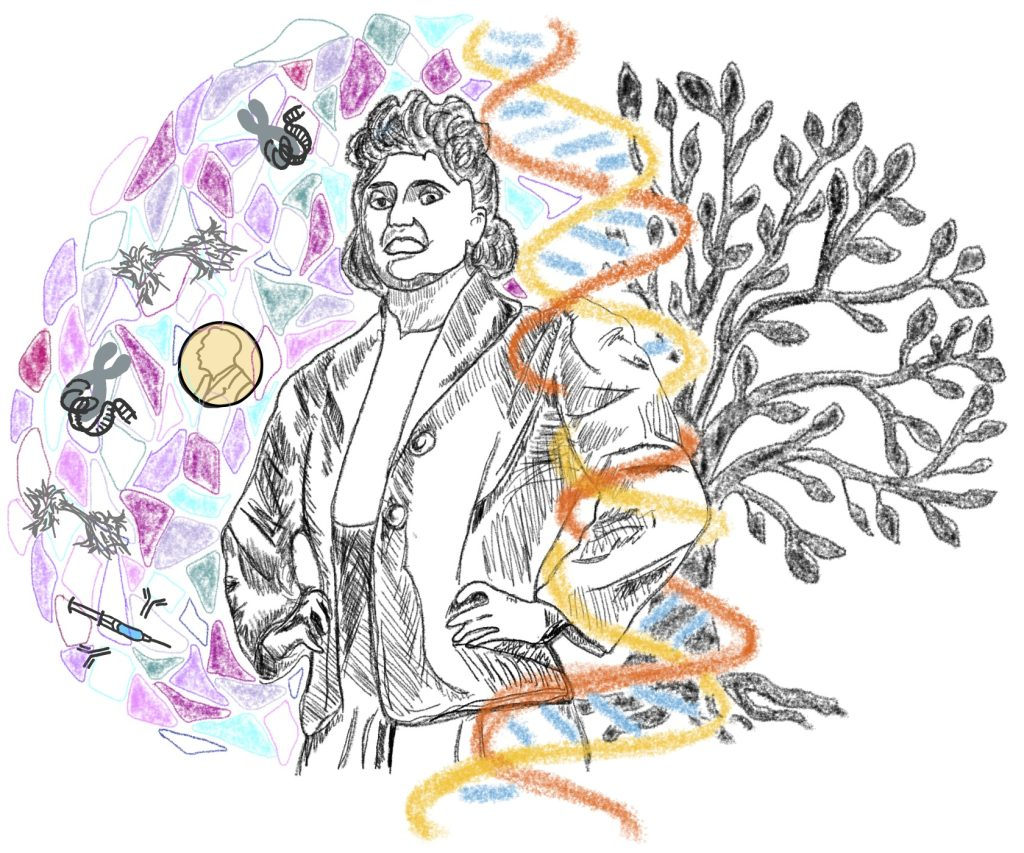
Image illustrated by Marina Schernthanner (Schernthanner, n.d.)
Imagine going to a doctor, and they cut off a piece of your tumor tissue without your knowledge and send samples down to a lab for testing. However, this is not a hypothetical scenario but rather a true event that occurred to Henrietta Lacks in 1951, when she went to the Johns Hopkins Hospital for her cancer treatment. Her family didn’t even know her cells were being used in labs all around the world until more than twenty years later, and they sure weren’t getting any money from it while companies were making millions (Documentary Online, 2021). Henrietta Lacks’ cells were used to create the first immortal cell line, known as HeLa cells, which have been crucial in numerous scientific breakthroughs, such as the development of the polio vaccine, cancer research, effects of radiance, toxic substances, and many other medical advancements. Thanks to HeLa cells, scientists today are able to use gene mapping to find a connection between heart disease passed down genetically and gene mutations that might underlie that very disease.
Henrietta Lacks was a Black woman, born on August 18, 1920, and worked as a tobacco farmer in southern Virginia (Neal, n.d.). After moving to Baltimore, she experienced numerous health problems (a lump on her cervix, vaginal bleeding, pain, etc. (Khan, 2011)) and went to Johns Hopkins in 1951, one of the few hospitals serving patients of color. Dr. Howard Jones, a gynecologist, had administered a biopsy (where a pathologist looked at two samples of her tissue (healthy cervical tissue and tumor tissue) under a microscope (Nott, 2020)) and diagnosed her with stage 1 cervical cancer. Without her consent, samples of her tissue were also sent to George Gey’s laboratory, head of Tissue Culture Research at Johns Hopkins (“Honoring Henrietta,” n.d.). Mind you, this biologist had been trying to grow cells outside the body for years, and it never worked until Henrietta’s “immortal” cells showed up. He not only created a cell line named after her (HeLa) but also tried to pass it off as a made-up person’s cell, “Helen Lane” (Documentary Online, 2021), as he was aware he could be sued for unethical practice. Unfortunately, before she was cured, she had passed away that same year. Unlike regular cells that died off after a short time, Henrietta’s (cancerous) cells kept multiplying across laboratories. This gave researchers the very tool they could use to discover scientific breakthroughs, one of those examples being gene mapping.
Gene mapping, the process of determining the specific order of genes on a chromosome, was discovered by Alfred H. Sturtevant. He came to his conclusions after analyzing data from Drosophila (fruit fly) crosses under his professor, Thomas Hunt Morgan, at Columbia University, in 1913 (Smith, 2013). In the 1960s and following years, HeLa cells were used for chromosome mapping, disease studies, and many unconsented testing. Due to the fact that these cells were regenerating, researchers seized the opportunity to conduct experiments. For instance, Henry Harris and John Watkins successfully created the first human-animal hybrid cells (with nuclei from both species) by fusing HeLa cells with mouse cells (Osmundsen, 1965). These hybrid cells allowed researchers to connect certain traits with specific chromosomes, later aiding in the human genome map. Additionally, the Human Genome Project (HGP) used Henrietta Lacks’ cells to map & sequence the entire human genome, a set of DNA instructions consisting of 3 billion base pairs, taking international scientists roughly 13 years (1990–2003) of effort (NHGRI, 2025). Although these issues raise ethical concerns, there were no legal requirements for doctors to obtain permission from patients prior to using their biological data for research (Stanford Blood Center, 2025) during that time. But, in 2013 the National Institutes of Health (NIH) granted the Lacks family controlled access regarding Henrietta’s genomic data through the NIH-Lacks Family Agreement (“Update to HeLa”, n.d.). And yet, her remarkable cells helped with groundbreaking discoveries in the scientific and medical field, including research on heart disease.
Modern medicine relies on HeLa cells for research on diseases, especially cardiovascular related. According to the American Heart Association, roughly over a hundred million adults in the US suffer from heart disease and it is the leading cause of death for most racial and ethnic groups (American Heart Association News, 2019). By identifying genetic traits associated with diseases through studies utilizing HeLa cells, researchers aim to develop targeted therapies that cure the illness long term. Consider CRISPR-Cas9 (a gene-editing technology (edits cells outside the body)) therapy, it was created by Jennifer Doudna and Emmanuelle Charpentier (Whang, 2022) and has proven to be highly effective in accurately diagnosing and treating heart disease. For instance, the sickle cell disease, where red blood cells (shaped like crescent moons or sickle) can slow down or block blood flow, which is extremely dangerous for the heart as it overworks it and causes tissue damage. CRISPR-Cas9 technology was able to edit a patient’s blood stem cells to produce fetal hemoglobin, completely reversing sickle cell disease in the long-term (Sharma et al., 2023). Additionally, Ken Hawkins, an Oregon native, participated in a clinical trial that blocked a protein from creating a life-threatening disease, transthyretin amyloidosis (Robinson, 2024) and yielded a successful result. This is a hereditary gene known to cause heart failure or peripheral neuropathy, tingling, numbness, or burning pain in hands and feet. CRISPR-Cas9 has many benefits, however, certain risks, such as changes to the genome being passed down to offspring, are uncertain. And it may fall short on equitable access as it is roughly $2.2 million per patient (Rueda et al., 2024).
To conclude, Henrietta Lacks’ immortal cells helped make millions of dollars for drug companies and researchers, while her own children couldn’t even afford to see doctors. When we talk about fair treatment in medicine, Henrietta’s story shows us why some people are scared to trust the system—because the system didn’t treat her right. Furthermore, considering CRISPR-Cas9 therapy, which can help over millions of people struggling with heart disease, it is not as accessible to everyone due to its high cost. Thus, what happened to Henrietta Lacks was wrong, and her family deserved the respect and recognition. However, without her cells, we wouldn’t know nearly as much about gene mapping, how our hearts can fail us, or how to fix them.
References
American Heart Association News. (2019, January 31). Cardiovascular Diseases Affect Nearly Half of American adults, Statistics Show. Www.heart.org. https://www.heart.org/en/news/2019/01/31/cardiovascular-diseases-affect-nearly-half-of-american-adults-statistics-show.
Documentary Online. (2021, May 13). The Way of All Flesh – Immortal HeLa Cells Documentary. YouTube. https://youtu.be/cTXaJOk_bjQ?si=ShA5iT20z53MFdYj.
[Illustration]. Natural Selections at Rocefeller University. https://selections.rockefeller.edu/henrietta-lacks-immortal-story-when-science-forgets-humanity/.
Johns Hopkins Medicine. (2025). The Legacy of Henrietta Lacks. Www.hopkinsmedicine.org. https://www.hopkinsmedicine.org/henrietta-lacks.
Khan, F. A. (2011). The immortal life of Henrietta Lacks. Journal of the Islamic Medical Association of North America, 43(2), 93–94. https://doi.org/10.5915/43-2-8609.
National Human Genome Research Institute. (2020). The Human Genome Project. National Human Genome Research Institute. https://www.genome.gov/human-genome-project.
Neal, L. (2024, February 12). Henrietta Lacks’ Immortal Story: When Science Forgets Humanity – Natural Selections. Rockefeller.edu. https://selections.rockefeller.edu/henrietta-lacks-immortal-story-when-science-forgets-humanity/.
Nott, R. (2020, October 9). Henrietta Lacks (1920–1951) | The Embryo Project Encyclopedia. Embryo.asu.edu; Arizona State University. https://embryo.asu.edu/pages/henrietta-lacks-1920-1951.
Osmundsen, J. A. (1965, February 17). 2 British Scientists Unite Cells Of Mice and Men Into Hybrids; Some Said to Have Lived Up to 15 Days — Experiment Is Hailed as Opening New Approach in Study of Genes [Review of 2 British Scientists Unite Cells Of Mice and Men Into Hybrids; Some Said to Have Lived Up to 15 Days — Experiment Is Hailed as Opening New Approach in Study of Genes]. The New York Times. https://www.nytimes.com/1965/02/17/archives/2-british-scientists-unite-cells-of-mice-and-men-into-hybrids-some.html.
Robinson, E. (2024). OHSU tests CRISPR gene-editing technology to treat deadly heart condition. OHSU News. https://news.ohsu.edu/2024/11/18/ohsu-tests-crispr-gene-editing-technology-to-treat-deadly-heart-condition.
Rueda, J. et al. (2024). Affordable pricing of CRISPR treatments is a pressing ethical imperative. The CRISPR Journal, 7(5). https://doi.org/10.1089/crispr.2024.0042.
Sharma, A., et al. (2023). CRISPR-Cas9 Editing of the HBG1 and HBG2 Promoters to Treat Sickle Cell Disease. The New England Journal of Medicine, 389(9), 820–832. https://doi.org/10.1056/nejmoa2215643.
Smith, D. (2013, March 21). The First Genetic-Linkage Map. California Institute of Technology. https://www.caltech.edu/about/news/first-genetic-linkage-map-38798.
Stanford Blood Center. (2025, February 2). The Complicated History of HeLa Cells: Henrietta Lacks’ Legacy in Biomedical Research — Stanford Blood Center. Stanford Blood Center. https://stanfordbloodcenter.org/the-complicated-history-of-hela-cells-henrietta-lacks-legacy-in-biomedical-research/.
Update to HeLa Cell Whole Genome Sequence Data Submission and Access Under the NIH Lacks-Family Agreement. NOT-OD-24-098. (2024). Nih.gov. https://grants.nih.gov/grants/guide/notice-files/NOT-OD-24-098.html.Whang, O. (2022, June 27). The Many Uses of CRISPR: Scientists Tell All [Review of The Many Uses of CRISPR: Scientists Tell All]. The New York Times. https://www.nytimes.com/2022/06/27/science/crispr-science-medical-research.html?smid=url-share.

This entry is licensed under a Creative Commons Attribution-NonCommercial-ShareAlike 4.0 International license.

