This is my Sustainability AI Position Paper where I convince the readers that AI is not always reliable when it comes to medical advice and navigating relationships by taking a position.
Validation or Vulnerability: The Paradox of Digital Comfort in an AI
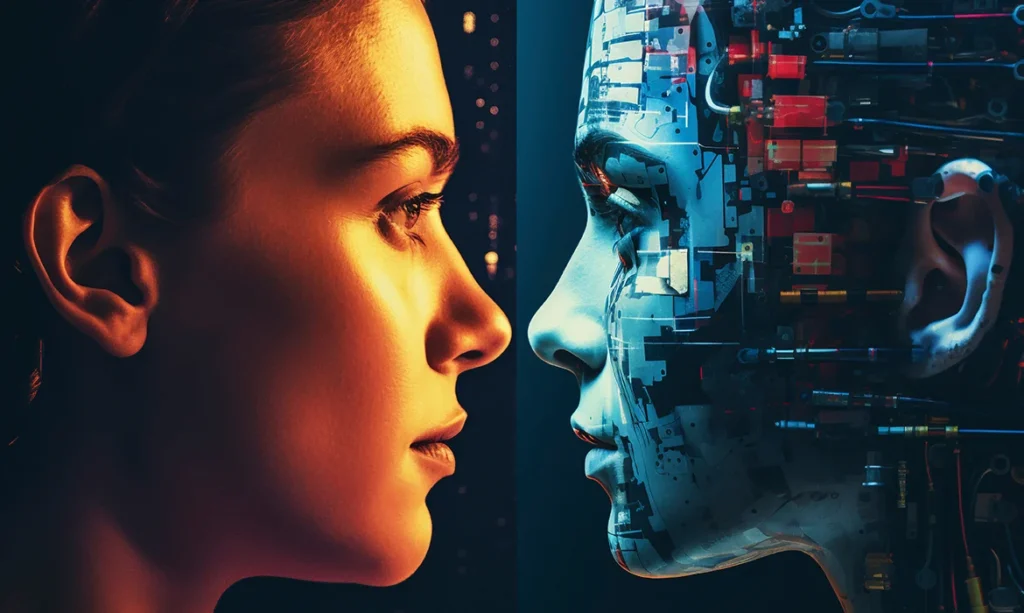
Image Generated and Obtained from DeepFA AI Website (DeepFA AI, 2025)
Have you ever needed a second voice to validate your emotions? Increasingly, people turn to artificial intelligence for that momentary reassurance; yet the same systems that offer comfort can quietly compromise their privacy. Many individuals tend to depend on AI chatbots for advice; whether it be for simple things, such as definitions of a concept, or symptoms and relationship advice. This can become dangerous as people treat this online tool as a professional, often selling out their information at the expense of quick answers. Additionally, AI is neither a therapist nor a physician, so certain prompts may lead to improper diagnoses, simply harming the individual wanting an instant answer. Artificial intelligence has the ability to significantly advance sustainability in healthcare, however, without ethical AI development, these programmed algorithms can undermine human well-being and interpersonal relations through job displacement and increase social isolation.
Artificial intelligence can greatly impact sustainability in the healthcare field, if used properly. Professionals propose that technology would not be taking over the jobs of physicians, but assisting them to ensure there is more patient to doctor contact and efficiency in the workplace (Ellis, 2024). This can impact sustainability by reducing the usage of paper/waste, as important data or patient information would be stored digitally. AI can also increase efficiency in the workplace by making the tasks physicians do easier; such as interpreting imaging from scans, processing large files of data quickly, and aid in conducting research. This would make it easier for the future generations as they would not have to go through a lot of paper files or make a mistake in diagnosing an important scan earlier on, rather rechecking to ensure AI is accurate. However, many generational doctors lack the training to properly utilize this advancement and it will cost millions to make it accessible for everyone (especially for training in clinics or medical schools). So at the end of the day, it comes down to the groups that are able to benefit from this technology and how algorithms will detect issues amongst patients.
Ethical development is required for AI to progress in society. There have been many cases where these programs under large companies discriminate against specific groups. When algorithms are trained on incomplete/skewed datasets, they replicate the same harmful patterns in real‑world situations, ultimately affecting the very populations sustainability aims to protect. Such injustice leads to a distrust in the healthcare system and can cause patients to avoid real care and rely on artificial intelligence. While AI may provide some accurate information obtained from other sources, its credibility is not as high.
The algorithms behind AI systems often have harmful effects on human well‑being and interpersonal relations. In a study, researchers conducted a test to check for bias on therapy chatbots, by asking them to act as experts and respond to various patient scenarios involving mental health issues. “AI showed increased stigma toward conditions such as alcohol dependence and schizophrenia compared to conditions like depression” (Stanford HAI, 2025). This shows that algorithmic systems can reinforce harmful stereotypes and treat certain groups of people as less deserving of empathy or support. When people rely on these tools for emotional guidance they risk forming parasocial relationships with systems that cannot feel human emotions. Certain responses from chatbots may cause individuals to internalize biased responses, often worsening their mental health or discouraging them from seeking real, professional help. Even Governor Hochul’s “2026 State of the State” address places great importance in sustainable progress and strengthening human-centered systems, rather than replacing interpersonal support with automated tools. Her focus on protecting workers and expanding social infrastructure highlights the risks of allowing AI to grow without ethical oversight (Hochul, 2026). This can be beneficial for sustainability as it is significantly connected to employment.
Replacing human jobs with AI is not only harmful for the economy, but also negatively impacts sustainability. Employment, which is a crucial factor in society, may be at a risk for professionals in the healthcare system. Jobs help many find their identities and form connections with their peers in and outside of the workforce. Not to mention, it also provides a steady source of income and supports the purchase of daily necessities; such as food, shelter, and transport. Using AI to do the jobs of people who were potentially trained for years and have actual certifications leads to job displacement and increases social isolation. Studies show that “emphasis on affirmation can make chatbots appealing for people who are lonely or otherwise lacking community” (Gardner, 2025). AI chatbots are giving people the help real therapists cannot at little to no cost. Forming a connection/community can be hard for many, however AI can assist in making those efforts easier, rather than serving as a tool that only helps individuals achieve idealistic comfort within themselves; such as better grades or a favorable diagnosis. Additionally, studies show that using AI for psychotherapy can sometimes be beneficial, based on a study conducted on 104 women diagnosed with anxiety in active warzones, yielding a 45%-50% reduction using traditional methods and 30%-35% reduction using artificial intelligence (Spytska, 2025). However, the lack of emotion engagement from AI seemed to be the main factor that researchers pointed out, proving that AI cannot have a part in every situation.
Some may say that relying on artificial intelligence for guidance is not harmful, but rather an extension of today’s digital life. Studies show that students spend a significant amount of time on AI, for both academic and personal reasons (Klimova and Pikhart, 2025). This proves to show that these tools have become embedded into the lives of many users, by increasing the accessibility for information and also catering to the user in a tone which they understand. Additionally, many users do not have to go out of their way to seek tutoring in places they feel are unformatable or require payments. As society progresses, it becomes inevitable to avoid digital resources that come at a low cost. AI, for instance, plays a significant role in the development of social sustainability by expanding who has access to knowledge.
However, this perspective looks over the long term risks that come with dependence on AI. Although people tend to treat this resource as an assistant, having it do all the work for the user is pointless in furthering them in society. Constantly relying on these chatbots create a barrier between genuine human interaction, which is essential for daily life and interpersonal relations. Individuals begin to lose touch of actual human connections as they distance themselves from conversations that require empathy or leave a long term impact on a person’s rationale. Additionally, people tend to forget the information they obtain from AI as it serves for short-term memory uses, showing that individuals do not retain information unless they have a connection to it or put in a significant amount of effort to find it. The decrease in attention span in modern day proves to show that heavy reliance on AI enables users from thinking critically or engaging in difficult issues (Klimova and Pikhart, 2025). If this continues, society will become isolated and lack depth as people shift from actual networking to short term convenience provided by AI, thus harming sustainability overall.
To conclude, artificial intelligence will continue shaping the lives of individuals and potentially healthcare in the future, but its benefits are insignificant without the ethical measures that protect the very people who rely on it. Governor Hochul’s “2026 State of the State” address emphasized sustainable progress regarding AI, focusing on advancing assistive technology for people with disabilities (Hochul, 2026). This is essential when it comes to not replacing humans with automated shortcuts that can potentially erode trust, privacy, and affect employment. Additionally, the National Alliance on Mental Illness (NAMI), a nonprofit organization that helps bring attention to the uses of AI in therapy, works to evaluate risks and provide trusted information on AI’s involvement in mental health (NAMI, 2025). This organization is crucial for the future of AI since they are currently conducting tests for accuracy, safety, risk of harm/misinformation, while also setting guidelines for AI and advocating to the public that these tools can only be trusted if it is programmed to be safe, unbiased, and understandable. While AI can improve efficiency and expand access to information for a large group of people, it also risks job displacement, emotional dependence, and the loss of interpersonal relations. If developed to provide equal access for everyone, AI would ultimately support society and instead of weakening it. Thus, developers should work towards sustainability by protecting the humans innovation is meant to serve.
References
Negative Impacts of Artificial Intelligence on Humans: Challenges and Threats Facing Humanity [Online Image Generated by AI]. (2025). DeepFA Blogs. https://deepfa.ir/en/blog/negative-impacts-of-artificial-intelligence-on-humans.
Ellis, L. (2024, August 30). The Benefits of the Latest AI Technologies for Patients and Clinicians. Harvard Medical School. https://learn.hms.harvard.edu/insights/all-insights/benefits-latest-ai-technologies-patients-and-clinicians.
Gardner, S. (2025, December 3). Experts Caution Against Using AI Chatbots for Emotional Support. Teachers College – Columbia University. https://www.tc.columbia.edu/articles/2025/december/experts-caution-against-using-ai-chatbots-for-emotional-support/.
Hochul, K. (2026). 2026 State of the State. Executive Chamber of New York. https://www.governor.ny.gov/sites/default/files/2026-01/2026StateoftheStateBook.pdf.
Klimova, B., & Pikhart, M. (2025). Exploring the effects of artificial intelligence on student and academic well-being in higher education: A mini-review. Frontiers in Psychology, 16(16). https://doi.org/10.3389/fpsyg.2025.1498132.
NAMI Takes the Lead to Push for Clarity and Safety in AI Mental Health Tools. (2025, December 16). National Alliance on Mental Illness (NAMI). https://www.nami.org/press-releases/nami-takes-the-lead-to-push-for-clarity-and-safety-in-ai-mental-health-tools/.
Spytska, L. (2025). The use of artificial intelligence in psychotherapy: development of intelligent therapeutic systems. BMC Psychology, 13(1). https://doi.org/10.1186/s40359-025-02491-9.Wells, S. (2025, June 11). Exploring the Dangers of AI in Mental Health Care. Stanford University HAI. https://hai.stanford.edu/news/exploring-the-dangers-of-ai-in-mental-health-care.

This entry is licensed under a Creative Commons Attribution-NonCommercial-ShareAlike 4.0 International license.

